
by.U Indonesia: UX Transformation & Launch
The scope of this project involved migrating Indonesia’s leading digital telco (by.U, Telkomsel) onto Circles’ SaaS platform while taking the opportunity to improve by.U’s acquisition, engagement, and monetisation journeys.
Unlike previous launches, this was a brownfield transformation — requiring us to evolve an existing product with our clients’ live customers, internal teams, and entrenched ways of working.
The challenge
The problem was not just UX — it was alignment and perception.
The existing UX was perceived as already “good enough”
Clients had low urgency for change
Ownership across client’s internal teams was fragmented
UX decisions were often opinion-driven, not evidence-based
At the same time, we needed to:
improve activation and conversion
increase feature adoption
drive engagement and recharge behaviour
👉 This required both product thinking and organisational influence, not just design execution.
My role
Design Manager (Circles) — Indonesia Market
Led UX across end-to-end journeys (onboarding → retention)
Drove UX improvements within our SaaS platform and business constraints
Established a working model with the client’s internal design team
Mentored and supported a newly formed local design team
Facilitated alignment across product, design, and engineering
Scope of Work
I led UX across two critical layers of the business and my team and I covered:
Acquisition (New Users)
SIM onboarding (pSIM / eSIM)
Plan selection and purchase
Activation experience
Retention & Monetisation (Existing Users)
Plan renewal/recharge flows
Power-up discovery (e.g. Data Rollover)
Usage-based engagement (e.g. Bonus Ngegas)
Feature education and adoption
Approach
We shifted the team from feature delivery → problem-led design
1. Align on Real Problems
Analysed funnel drop-offs and behaviour gaps from existing client data
Synthesised past research and internal insights
Reframed stakeholder discussions around user problems, not features
3. Validate with Users
Rapid testing with proxy users (interns)
Usability testing with real users
Measured task success and SEQ (perceived ease)
2. Co-Create with Clients
Ran joint workshops with clients’ product and business teams
Used design to mediate alignment and prioritisation
Positioned migration as a UX improvement opportunity
4. Iterate & Operationalise
Refined flows based on evidence
Improved clarity, usability, and discoverability
Built momentum for evidence-based decision making
Key Focus Areas
The work is broken down into three core UX problems. Each case study below dives into one of these areas.
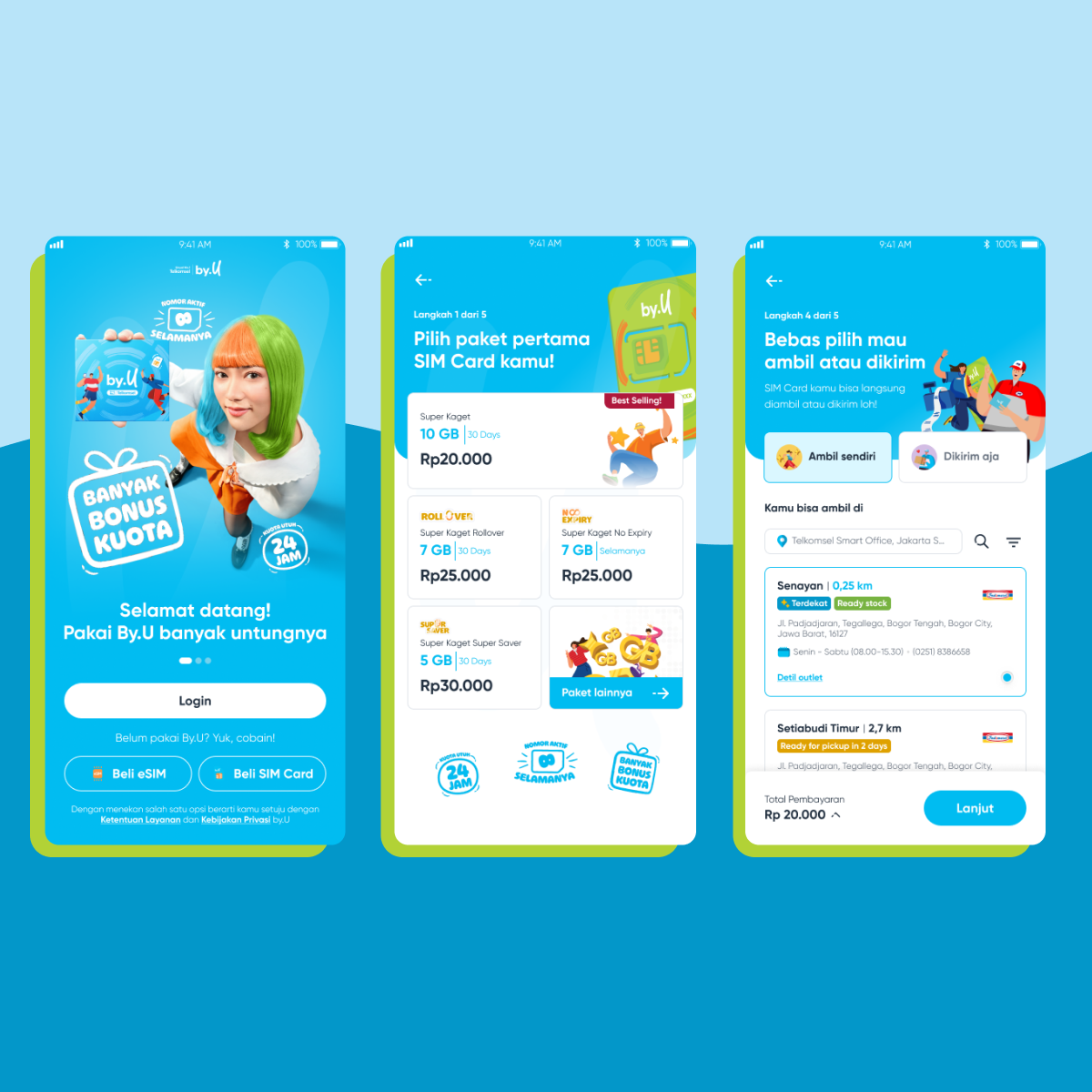
Improving onboarding and reducing drop-off for new by.U customers
Onboarding & activation
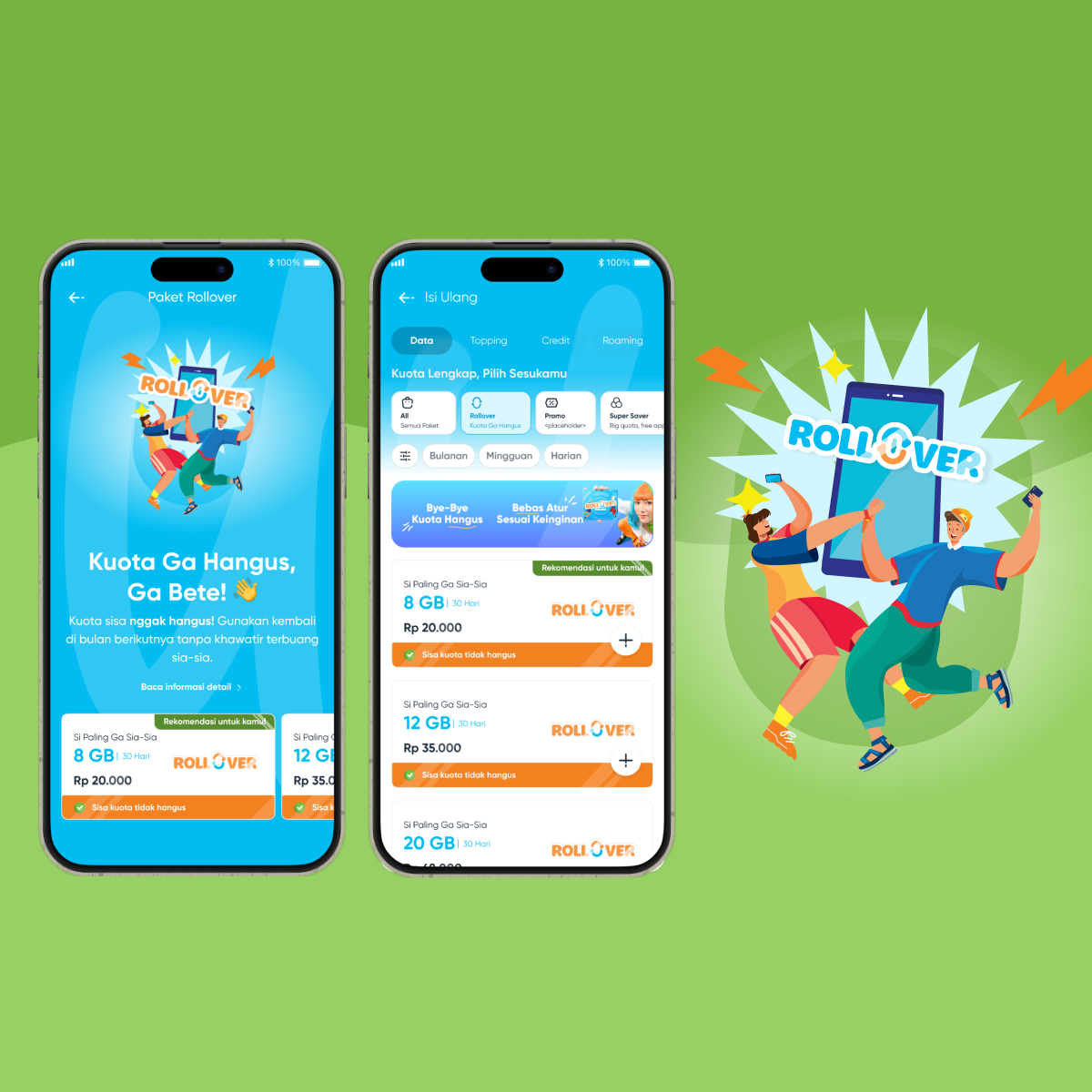
Driving understanding and uptake of new value proposition products like data rollover
New product adoption
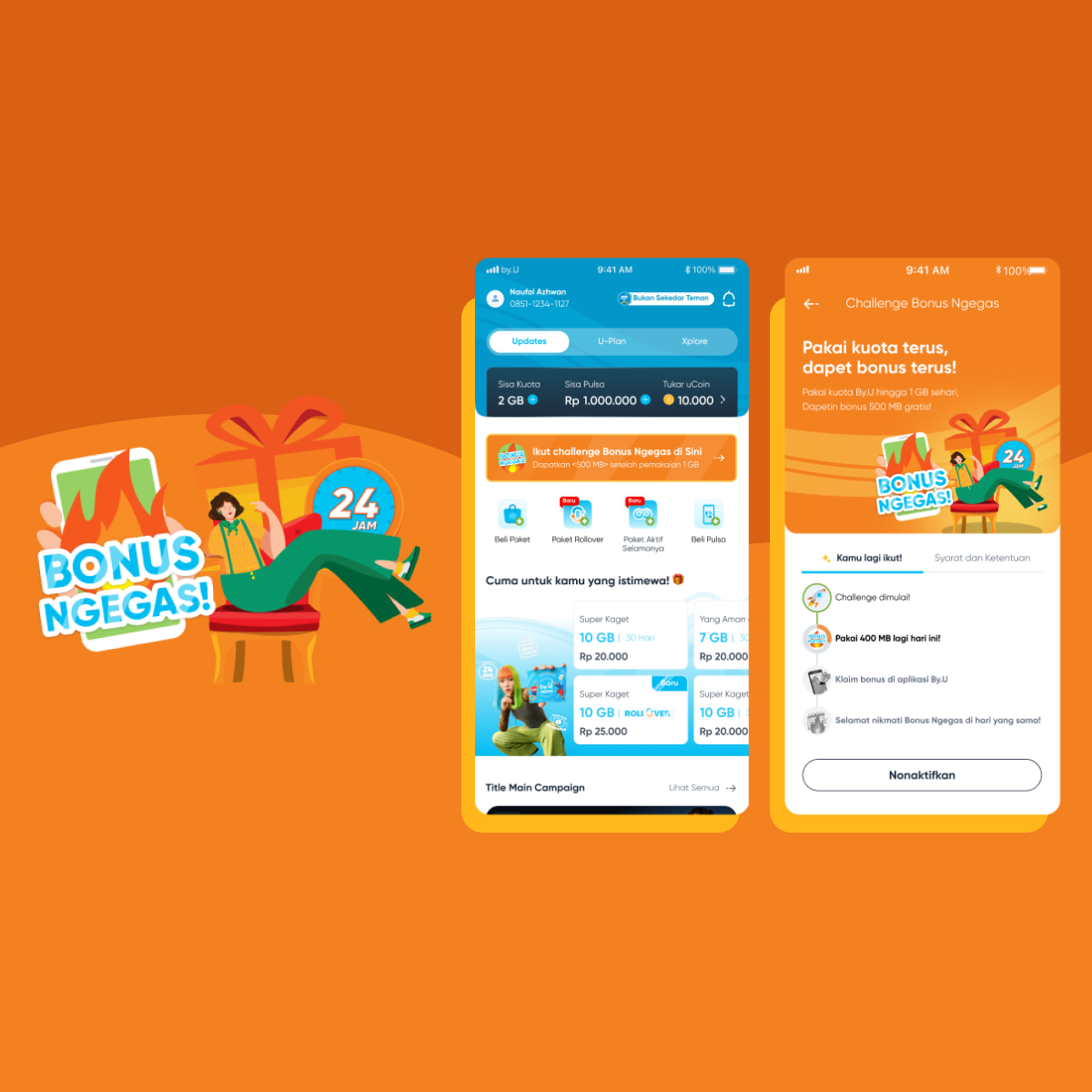
Increasing usage through Bonus Ngegas (Free daily data)
Engagement & retention
Outcome
Validated UX improvements across multiple testing cycles
Improved clarity, discoverability, and task success across journeys
Increased stakeholder confidence in UX-led decisions
Shifted team culture from opinion-driven → evidence-driven
Established a scalable collaboration model for ongoing delivery