
Circles X – Platform UX foundations
🔹 Overview
This project focused on establishing the UX foundations for Circles X, Circles’ proprietary telco SaaS platform used by internal operators (e.g. product managers, operations teams, customer support) to configure and manage digital telco products.
Unlike customer-facing products, the challenge here was designing for internal users (operator experience / OX) across multiple markets, while the platform was actively being used to launch and support live telco products.
This meant we were:
building a scalable platform experience while simultaneously supporting ongoing market launches — effectively “building the plane while flying it.”
🔹 The Challenge
The platform had evolved organically with strong engineering ownership but lacked:
a clear end-to-end view of telco journeys
a consistent UX structure across CMS workflows
a shared understanding of internal user needs
alignment between frontend (CX) and backend (OX)
As a result:
workflows were fragmented across systems
internal users relied on tribal knowledge
decision-making lacked a unified UX perspective
🔹 My Role
Design Lead (Platform UX / Circles X)
Led foundational UX work for internal platform (CMS / operator tools) with the design team
Defined service blueprints across telco journeys
Established early operator personas (OX)
Initiated internal user research with platform users
Drove alignment across product, design, and engineering
Contributed to setting up the CMS design system with engineering
🔹 Design Scope
The work focused on building a foundation layer for platform UX:
Mapping end-to-end telco journeys
Defining frontstage (customer experience) vs backstage (operator experience)
Designing for internal workflows across CMS tools
Supporting multi-market telco operations
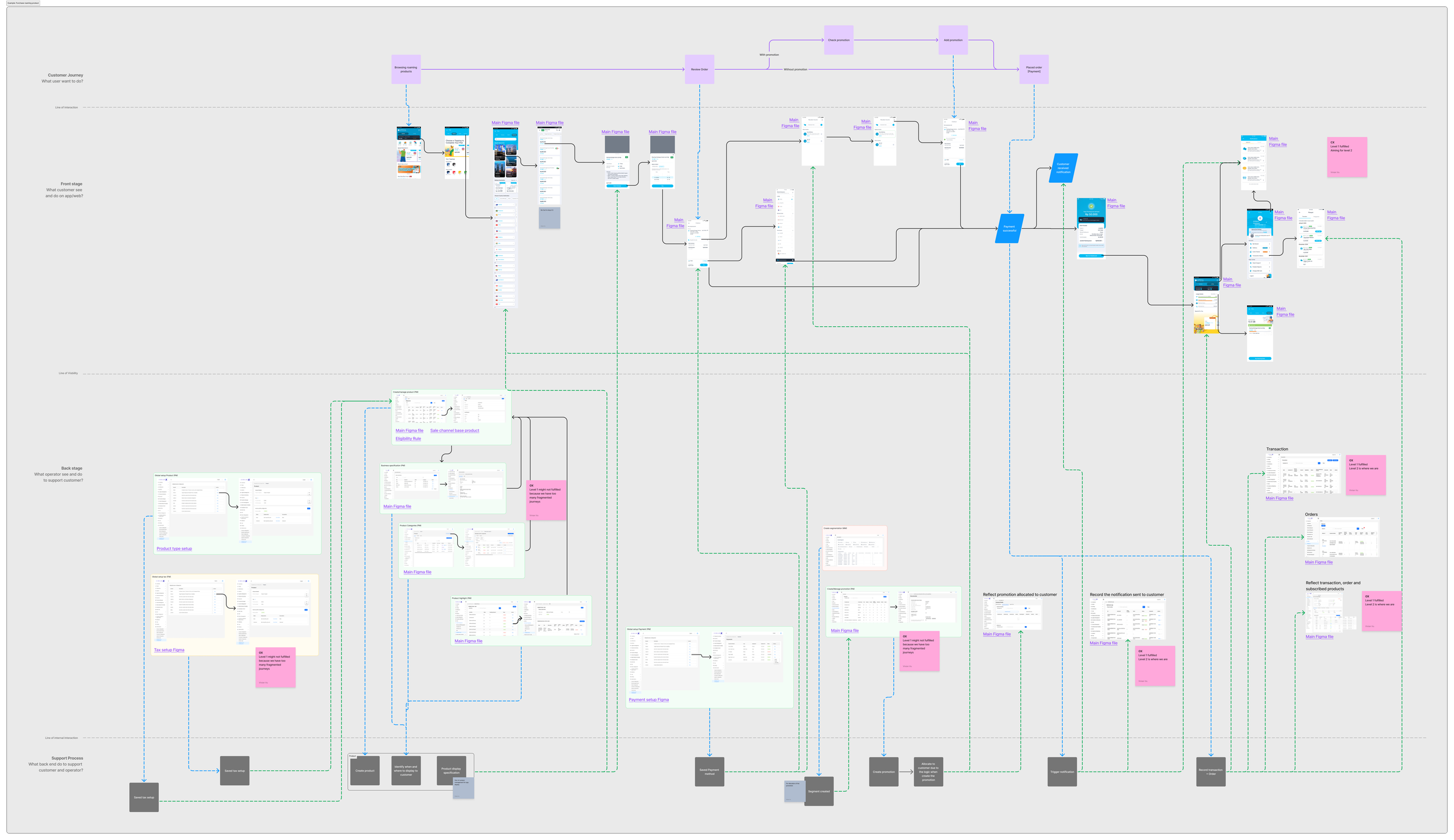
🔹 Approach
1. Service Blueprinting (System-Level Understanding)
We mapped key telco journeys (e.g. purchasing roaming products) across:
Frontstage (CX)
→ What customers see and experience (app / web)Backstage (OX)
→ What internal teams configure and operate via Circles X CMS
This was scaled across multiple journeys within the telco lifecycle:
onboarding
global & product configuration
notifications and campaigns
operations (e.g. SIM delivery, order handling, billing)
customer care
👉 This created a single source of truth linking:
reference customer experience
internal operator workflows
platform capabilities
It was also used as:
onboarding material for new PMs and designers
a reference to assess platform maturity vs ideal state
2. Defining Operator Personas (OX)
We identified key internal user groups:
Product Managers & Business Owners
Marketers
Customer Support Agents
Operations Teams (e.g. SIM delivery, billing)
Through internal interviews and workflow observation, we uncovered:
differing priorities across roles
heavy reliance on fragmented tools
lack of visibility into end-to-end processes
👉 This helped us define:
key use cases
information needs
operator workflow dependencies
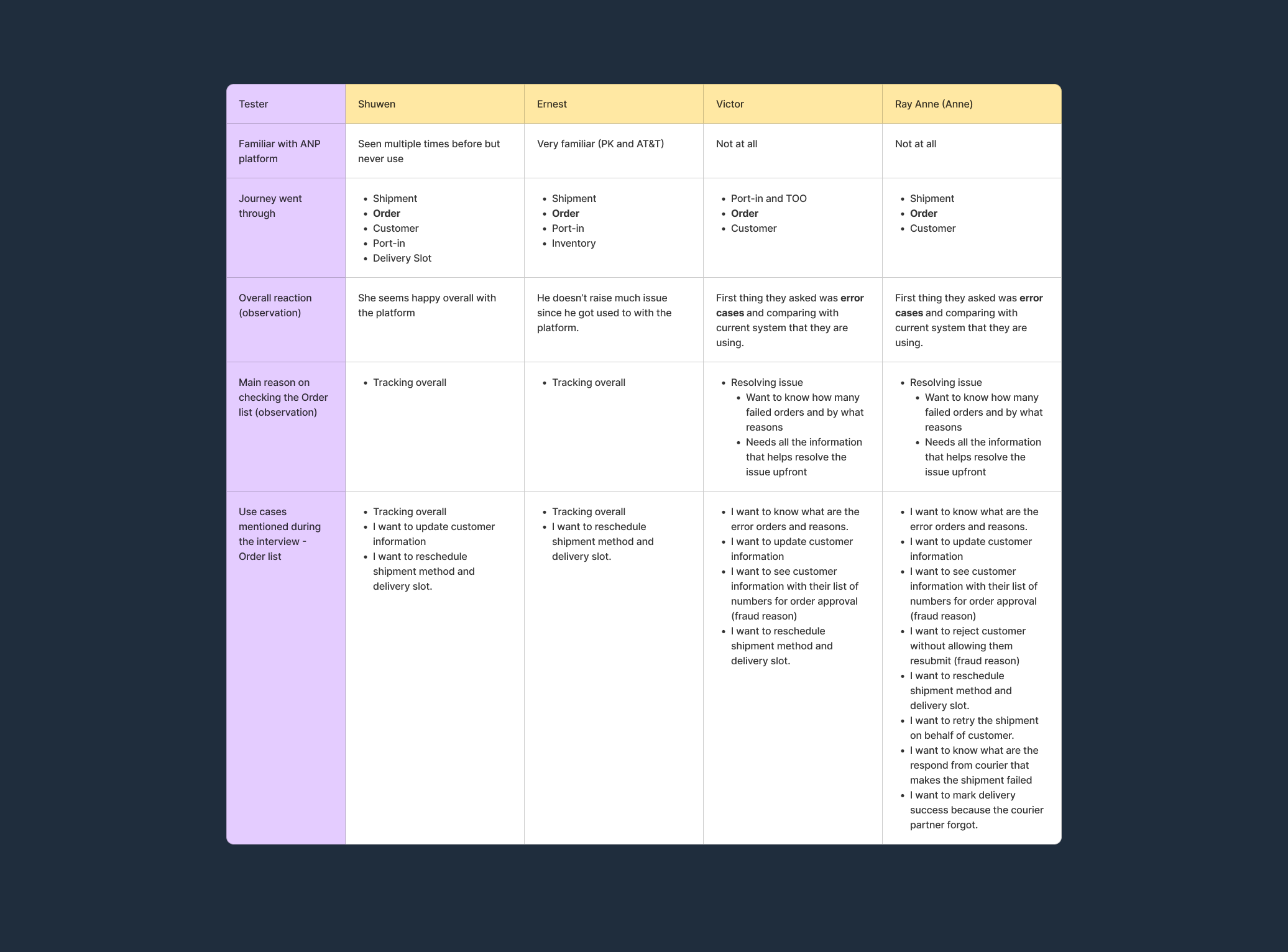
3. Internal User Research (Enterprise UX)
We initiated structured interviews with internal users in Circles (operators) to understand:
how they navigate CMS workflows
how they track issues (e.g. failed orders, error cases, customer tickets)
what information they need to resolve problems
Key patterns observed:
experienced operators relied on familiarity, not clarity
new users struggled to understand system relationships
strong need for error visibility and operational insights
👉 These insights informed:
information architecture
workflow prioritisation
platform UX improvements to be included in future roadmap
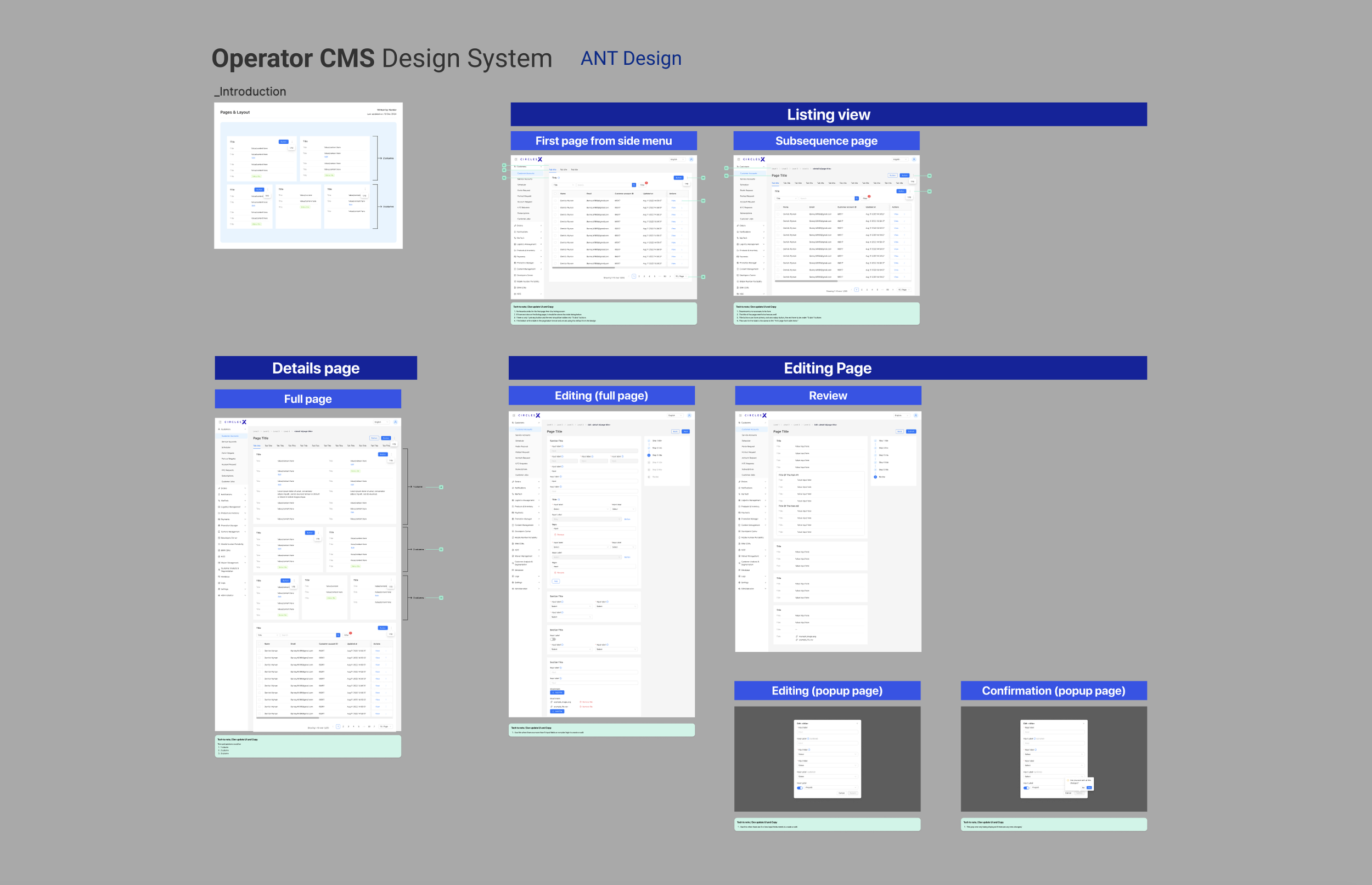
4. Establishing CMS Design System
We collaborated with engineering to introduce a scalable UI foundation using Ant Design.
Why Ant Design:
widely adopted and well-documented
strong compatibility with engineering workflows
enabled faster development and consistency
reduced design–engineering friction
👉 This allowed us to:
standardise UI components across CMS
improve consistency across tools
accelerate feature development
5. Aligning Product, Design, and Engineering
We used the above artefacts (blueprints, personas, research) to:
align teams on how the platform works end-to-end
shift conversations from feature-level to system & journey -level thinking
support prioritisation across multiple market needs
🔹 Outcome
Established a shared system-level understanding of telco journeys across teams
Created reusable service blueprints used for onboarding and alignment
Defined foundational operator personas to guide platform design
Introduced a scalable design system for CMS, improving consistency and development efficiency
Initiated internal user research practices for platform UX
Enabled teams to make more informed decisions across CX–OX dependencies
👉 Most importantly:
shifted the organisation from fragmented, feature-driven thinking to a more structured, system-level approach to platform UX.
🔹 Key takeaways
Enterprise UX requires designing for internal workflows, not just interfaces
Service blueprinting is critical to align CX and OX across complex systems
Internal user research is essential to uncover operational pain points
Strong UX foundations enable scalability across markets and teams