

Building a scalable multi-market launch playbook for global design operations
Following the Japan launch of povo 2.0 and Onic in Pakistan, I initiated and led the creation of a Launch-Design Playbook to guide Circles' design team through future market entries. This resource became essential in streamlining how we scale our design operations, grow local teams, and engage with clients across different global contexts.
Context
As Circles expanded into Indonesia, Mexico, and Pakistan, I realised that we had to quickly scale hiring, operations, and delivery across cultures and time zones. The playbook helped bring consistency and focus to how the design team tackled parallel launches while remaining adaptable to regional needs.
Goal
Circles needed a documented, repeatable framework for launching new markets that would align design strategy, team setup, and client engagement. Each launch had previously relied on ad hoc processes and institutional knowledge. There was no standardised approach for navigating differing market types—greenfield (new brands) and brownfield (existing telco migrations).
My role
As Product Design Manager, I led the creation of the playbook from the ground up. I collaborated closely with Product, Engineering, and Business leads, while supporting new market teams through hiring, onboarding, and delivery. I also helped shape the org structure for regional design teams.
-
Synthesise key learnings
Take learnings from past market launches as a starting point
-
Create differentiated workflows
Deep dive into the differences between brownfield and greenfield market needs and create relevant design workflows for them
-
Org design
Understand the nuances for each market launch and adapt team building approach for each market
-

Client engagement strategy
Ensure that client expectations are aligned via proactive engagement
Step #1
Synthesise key learnings from Japan (Povo) and Pakistan (Onic) launches
This includes:
Inclusion of design delivery timelines and visibility in the overall project plan to ensure more accurate planning
Active (not reactive) hiring plan for subsequent launches
Greater lockstep between engineering and design
Early callout of project risks
Continuous sharing of learnings across cross-functional teams via various communication channels
Step #2
Created differentiated workflows for greenfield vs. brownfield market types
Greenfield markets: New brand launches with no existing customer base. Required complete brand identity design, customer acquisition flows, and product experience from scratch. Examples: Povo 2.0 (Japan), Wim (Mexico), Onic (Pakistan).
Brownfield markets: Existing telco operators transitioning to the Circles platform with established customer bases. Required migration planning, service continuity design, and coordinated transitions from legacy systems. Example: by.U (Indonesia, Telkomsel's sub-brand).
Impact on the playbook: This distinction shaped the playbook's structure. Each market type required different timelines, stakeholder engagement models, and design priorities. The playbook provided separate workflows for each scenario, ensuring teams could quickly identify which approach to follow.
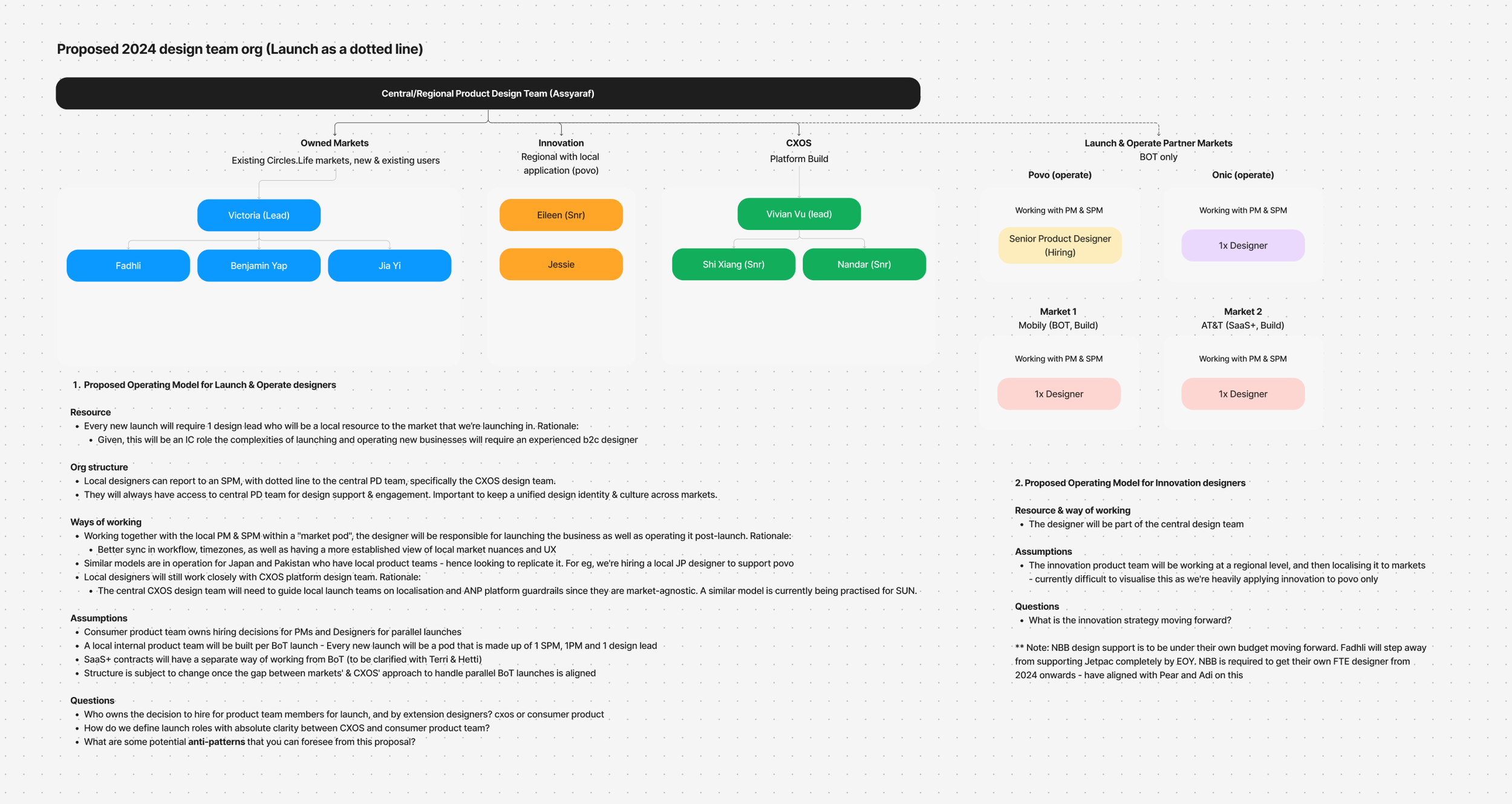
Team building & organisational design
Step #3
Outlined hiring strategies for sourcing and onboarding local designers, including defining role requirements tailored to market needs, establishing evaluation criteria that balanced technical skills with cultural fit, and creating structured onboarding programs that covered both Circles' platform and regional context. This ensured new team members could contribute effectively within their first few weeks.
Established organisational design principles for scaling teams during launch and post-launch phases, including determining optimal team structures (embedded vs. centralised), defining clear reporting lines and decision-making authority, and planning resource allocation to balance immediate launch needs with long-term operational sustainability. These principles helped regional teams grow autonomously while maintaining alignment with global standards.
Client Engagement & Co-Creation
Step #4
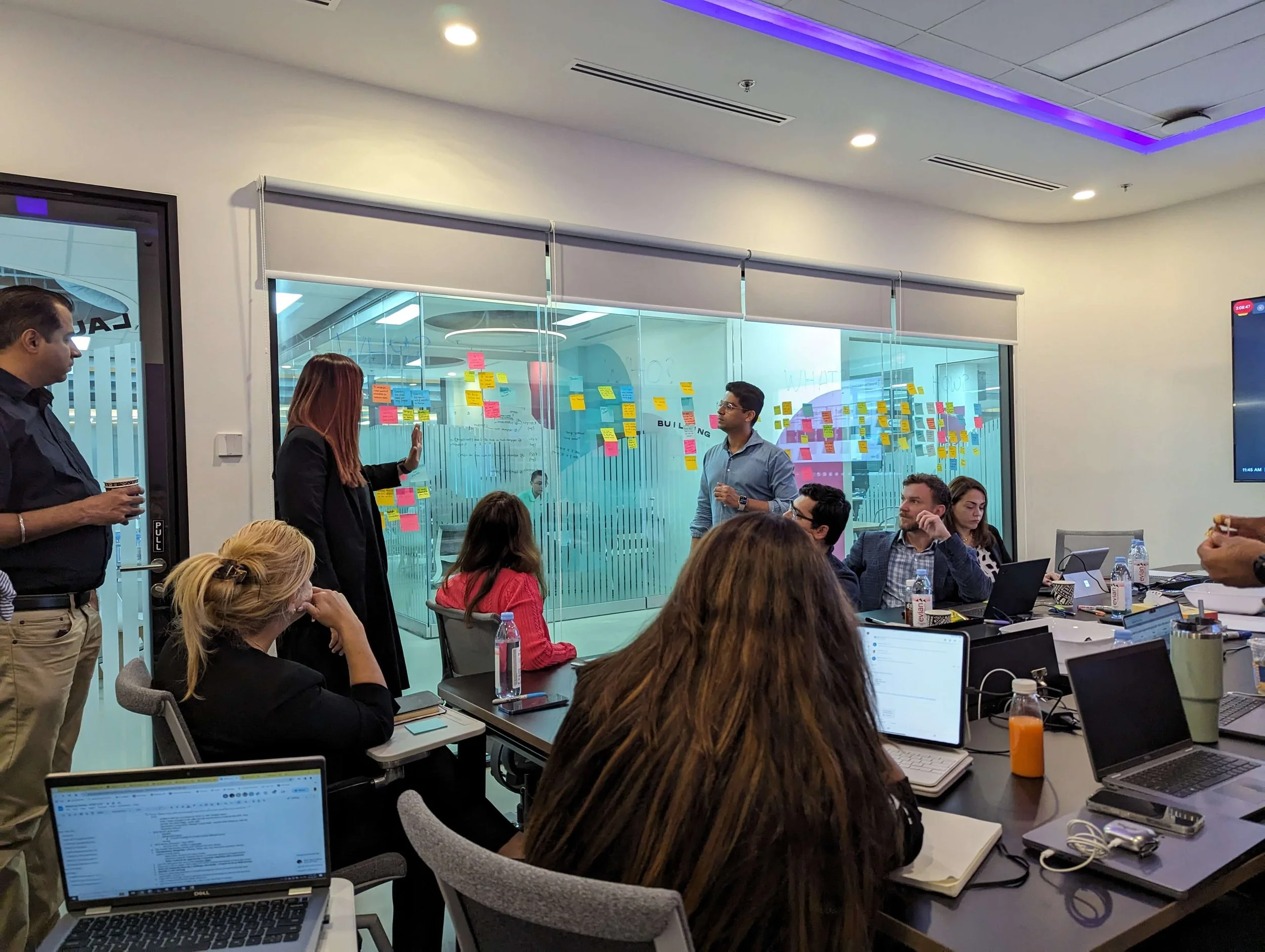
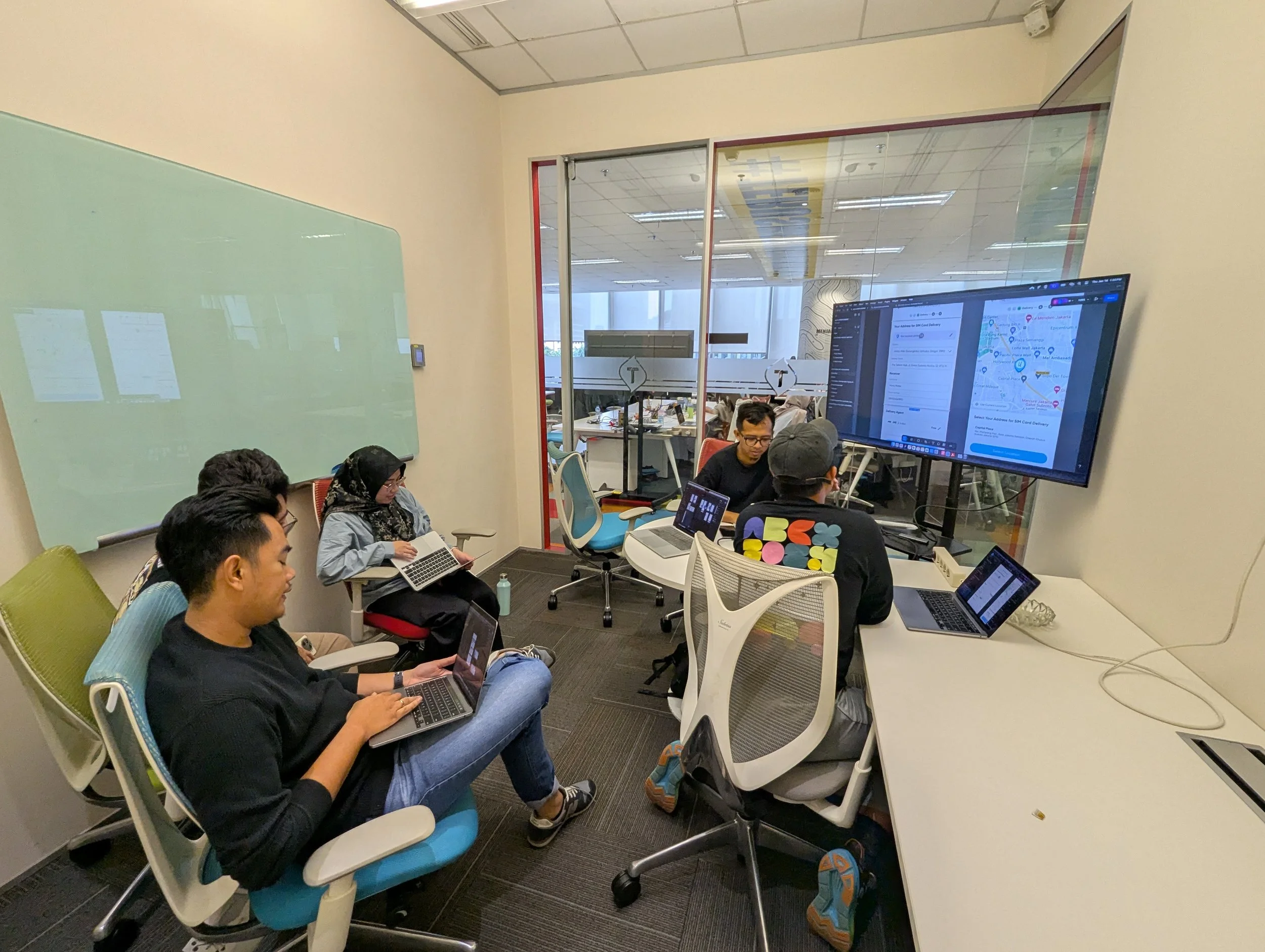
We developed comprehensive guides for client engagement that established design rituals, checkpoints, and feedback loops throughout the launch process. The primary goal was to transform clients from reviewers into active co-creators—ensuring continuous alignment and creating a shared sense of ownership over design decisions as the project progressed. By establishing early buy-in through collaborative workshops and regular touchpoints, we minimised the risk of late-stage misalignment and ensured communication remained constructive and goal-oriented rather than reactive or derailed by last-minute concerns.
Outcome
Enabled faster ramp-up for design teams in within the respective local markets
Reduced dependency on HQ teams and empowered in-market ownership
Improved internal efficiency, cross-functional collaboration, and stakeholder trust
The Mexico launch—branded as Wim—demonstrated the playbook’s repeatability. From team formation to delivery, the framework provided clarity, aligned stakeholders, and scaled effectively within a new cultural and operational context.
Directly contributed to Circles’ global expansion: “Circles’ platform enabled rapid global expansion to 6 countries in 2 years through a scalable playbook and reusable platform components.”

Reflections
The Multi-Market Launch Playbook reinforced the need for adaptable systems thinking in design leadership. By synthesising learnings from Japan and Pakistan launches, I identified patterns that could be standardised, like design delivery timelines and risk callouts - while recognising where adaptation was critical. The distinction between greenfield and brownfield markets became a cornerstone of this approach, demonstrating that effective frameworks must account for fundamentally different operational realities while empowering teams to make context-appropriate decisions.
Creating the playbook strengthened my skills in team structure, operations, and stakeholder enablement. I developed hiring strategies that balanced technical requirements with cultural fit, established organisational design principles for scaling teams, and built client engagement frameworks that transformed operators from reviewers into co-creators through structured rituals and feedback loops. These operational foundations, from tooling decisions to review processes, became critical enablers that allowed regional teams to execute independently while maintaining quality standards.
Ultimately, the playbook elevated Circles' ability to scale design without sacrificing quality or speed. It enabled faster ramp-up for teams in Indonesia, Mexico, and Pakistan, reduced dependency on HQ teams, and improved cross-functional collaboration. The Mexico launch of Wim demonstrated this repeatability in practice, while the broader impact contributed directly to Circles' rapid expansion to 4 countries in 3 years—proving that documented, adaptable frameworks can serve as force multipliers for both design quality and business growth.