

Building a reusable experience foundation for global launches – Circles X Platform Foundation
As Circles’ SaaS solution acquired new clients and expanded into new markets, we needed a shared reference model to streamline product delivery across our two core offerings: the Customer Management System (CMS) for telco operators and the customer-facing app/web experience. The Circles X Platform foundation — executed along with the Multi-Market Launch Playbook—became the foundation for how we scale consistent, adaptable design.
Challenge
Circles needed a foundational implementation model that would streamline product experience development across CMS and consumer-facing platforms. Without a unified starting point, every launch risked delays, duplicated effort, and inconsistent UX. We needed a central source of truth for flows, patterns, and UI decisions that could flex with market needs while preserving product coherence.
This work was initiated alongside the Multi-Market Launch Playbook effort. While the playbook provided high-level frameworks for how to launch, the Circles X reference platform gave teams the actual building blocks to execute reliably.
As design Lead, I was responsible for defining and documenting our modular reference journeys. I also led a team of designers in Singapore in this collective effort. I worked closely with Engineering and PMs to ensure the system could be applied across different market contexts, and collaborated with local team members to validate its effectiveness.
My role
Assyaraf Johari - Lead Product Designer
Vivian Vu - Senior Product Designer
Cheryl Ang, Jacelyn Chia, Jiayi Ng - Product Designers
Team
How we started
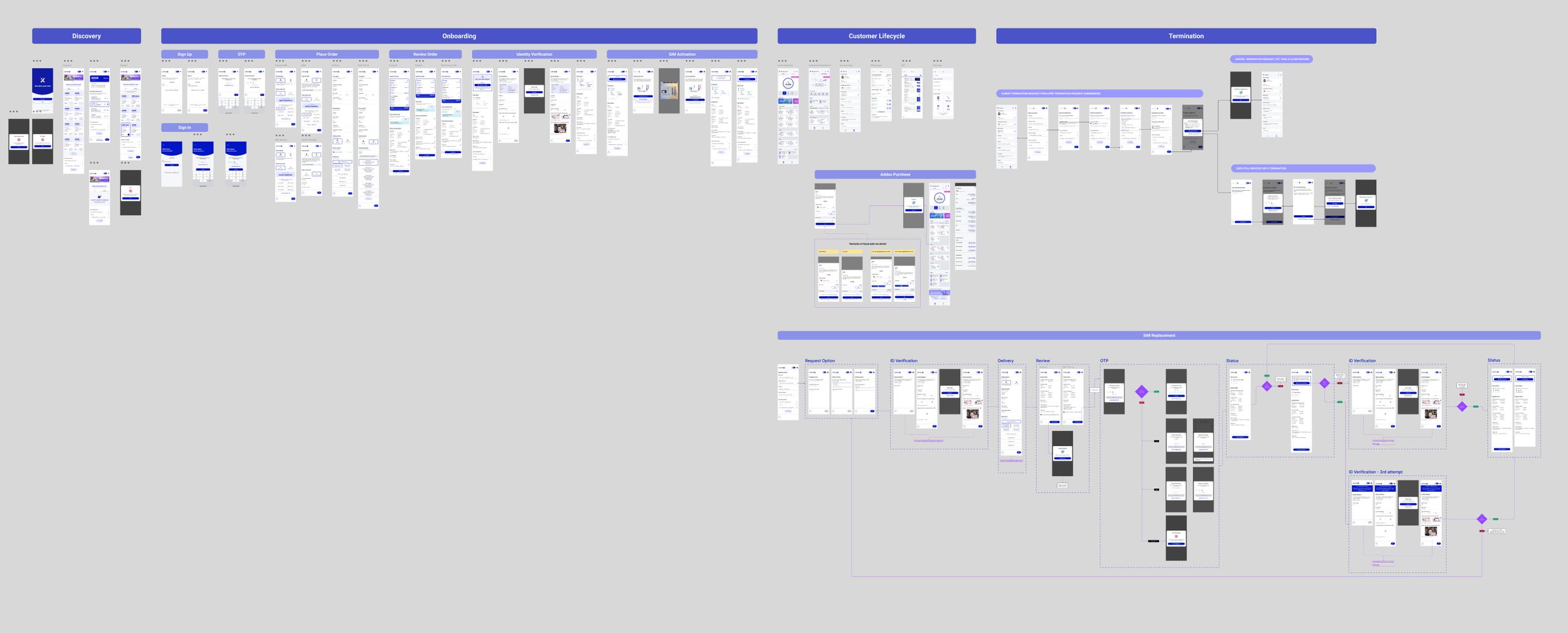
We started by defining core customer and CMS user flows using shared journeys as baseline. This involved mapping out two distinct sets of experience architectures. By establishing these shared journeys early as distinct but complementary systems, we created a common language across product, engineering, and design teams—ensuring that regional adaptations could happen without reinventing core flows on either the customer-facing or operator-facing side of the platform.
End-User Journeys (B2C): Covered critical paths like user onboarding, plan management, payment flows, usage tracking, and support—all designed to work cohesively while allowing flexibility for market-specific requirements.
Operator Journeys (B2B): Mapped out the complete CMS experience for telco operators, including product and plan configuration, campaign creation and management, and operational workflows for monitoring, customer support, and business analytics.
Design system selection & integration
Key activity #1
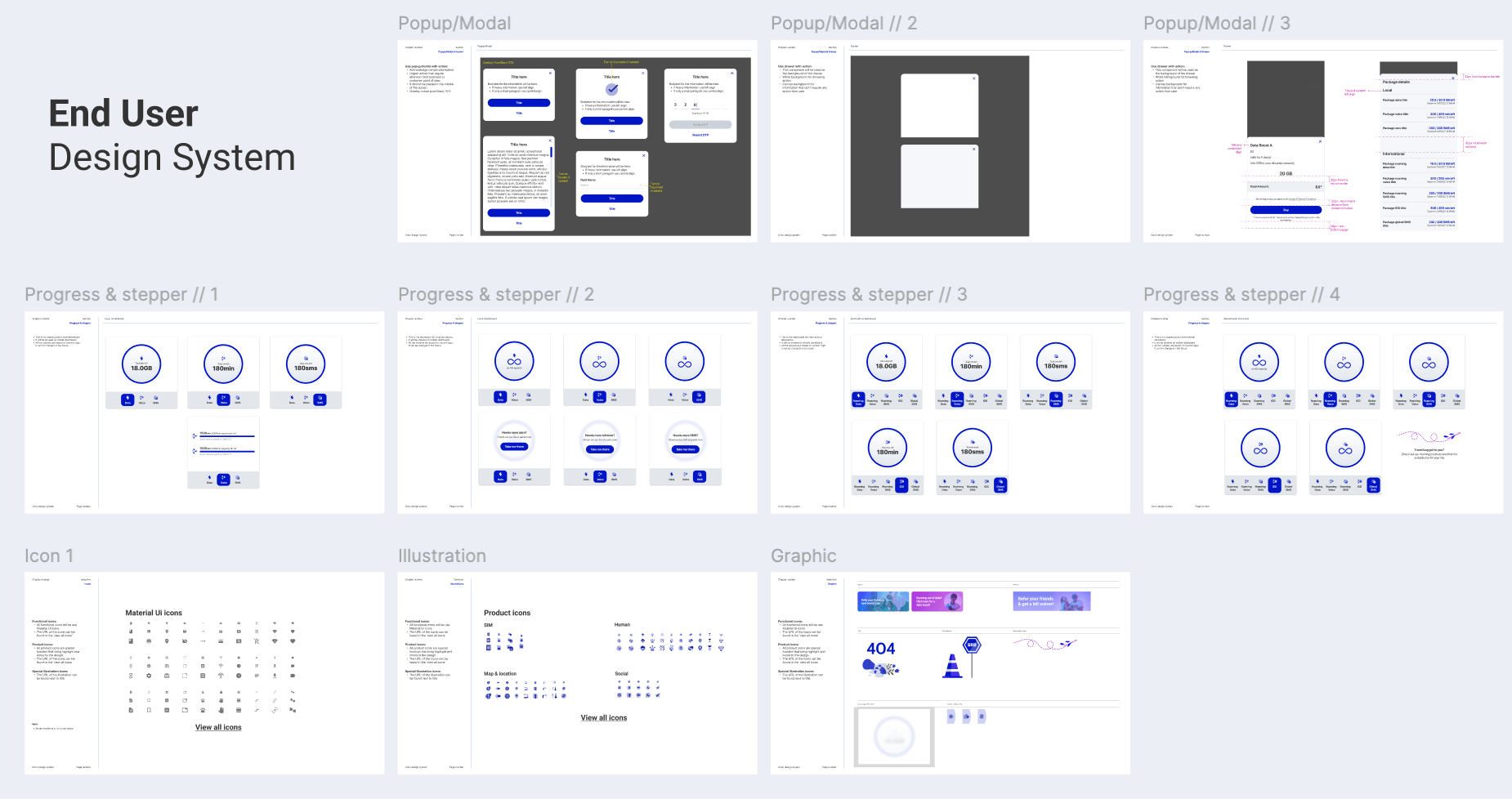
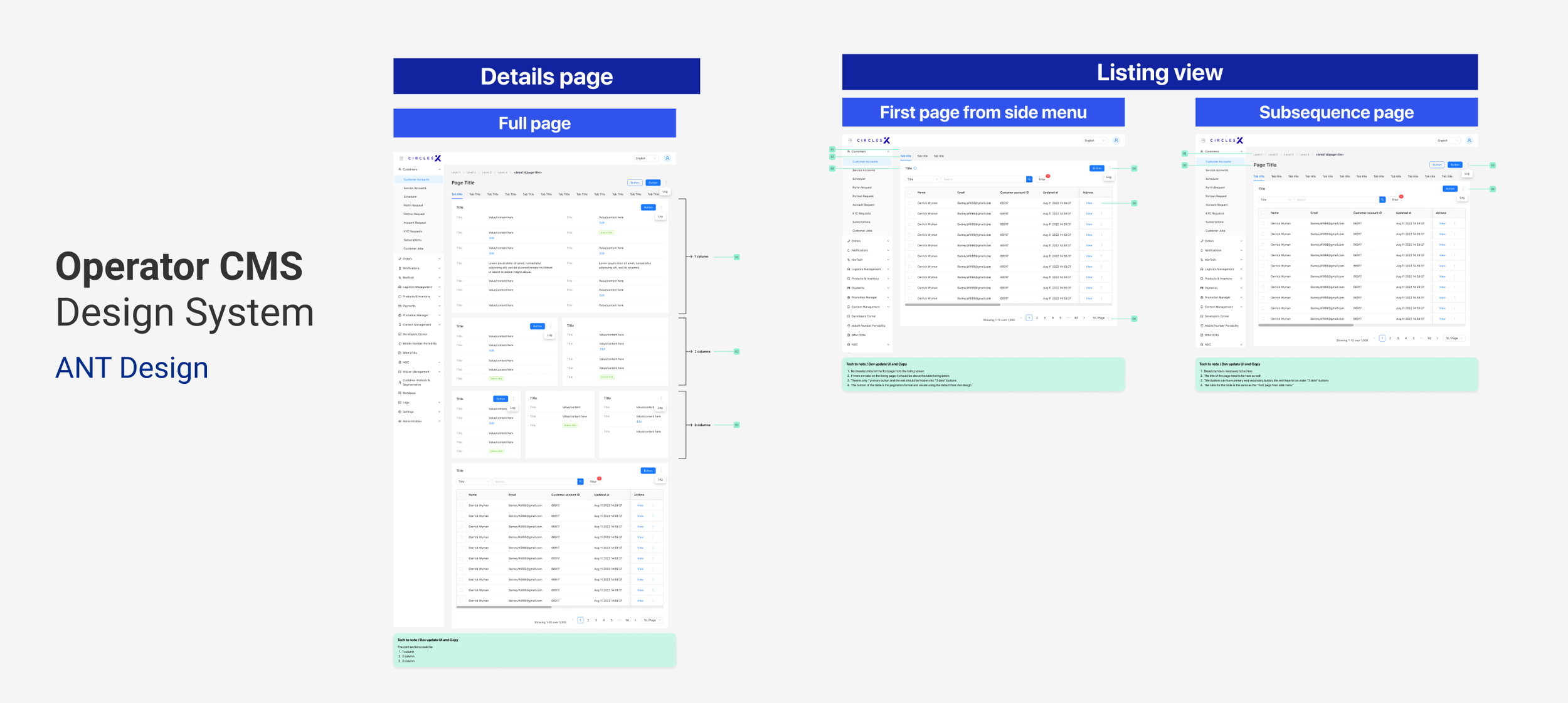
Through close consultation with Product Managers and Engineers, we established two separate modular design systems—one for the B2C end-user app and another for the B2B operator-facing CMS. This strategic decision was driven by the distinct needs of each product: regional teams required flexibility to customise and localise the consumer app for market-specific requirements, while the CMS needed to remain centrally managed by the core design team to ensure operational consistency across all markets.
By maintaining two dedicated design systems, we enabled regional teams to move quickly on end-user experience adaptations without impacting the stability of the operator platform, while the central team preserved control over the business-critical CMS that powered all launches.
Key activity #2
Strengthening design documentation
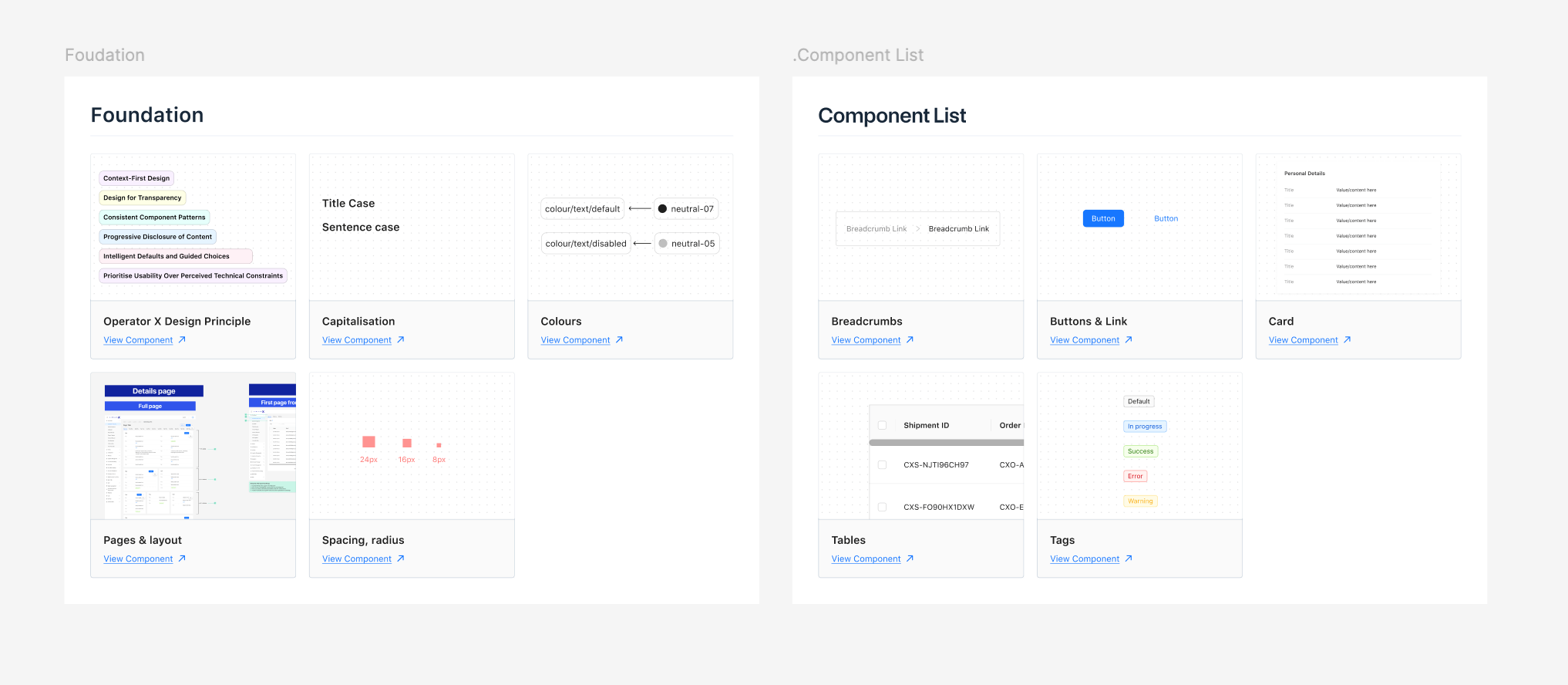
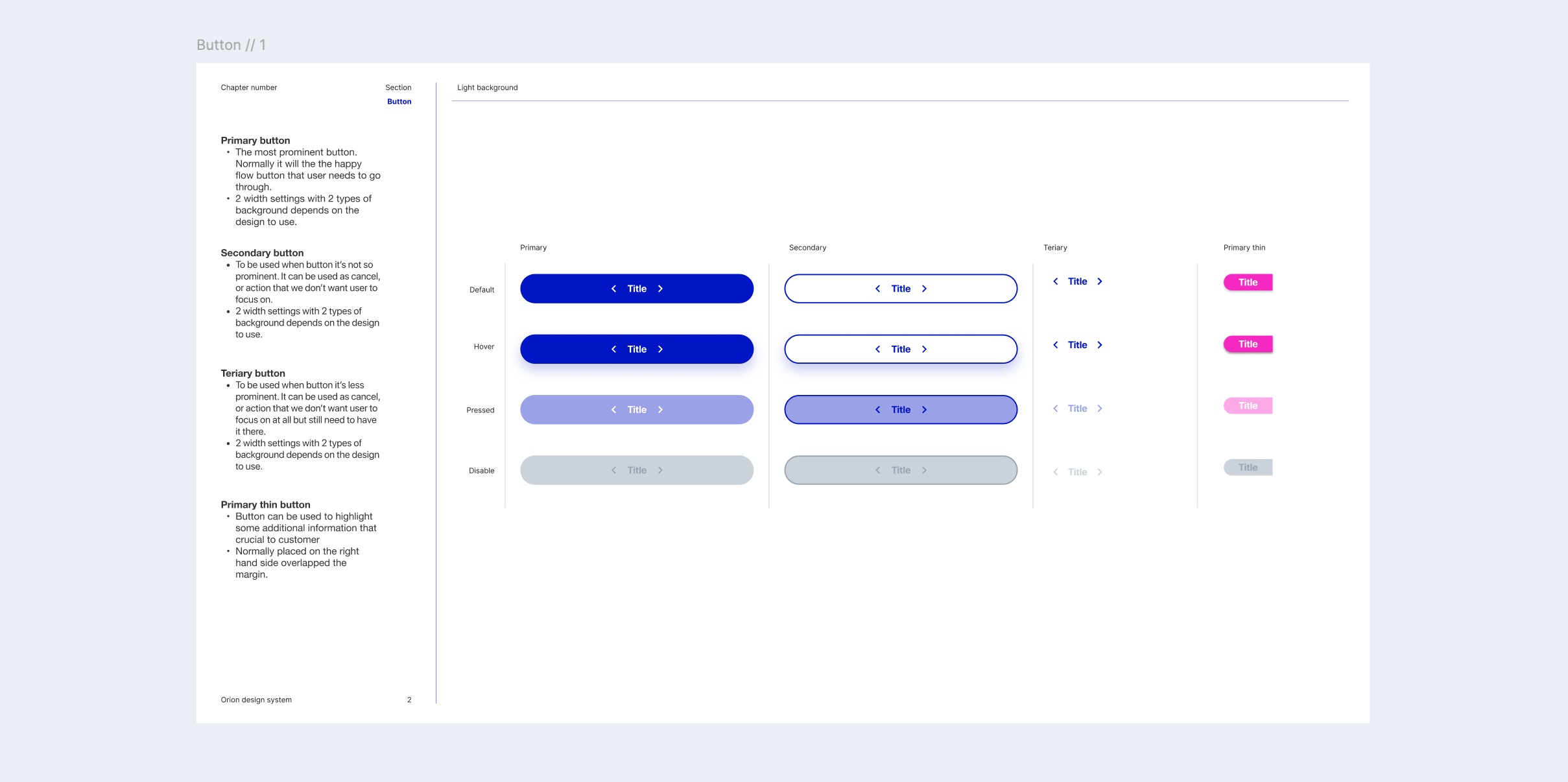
Built and documented the complete reference journey in Figma with linkable sections, detailed annotations, and component variants. This included creating a systematic documentation structure that allowed team members to navigate between related flows, understand design decisions through contextual notes, and access ready-to-use variants for different market scenarios.
As we progressed, we refined our design ops practices —introducing version control protocols, standardised naming conventions, and collaborative review workflows. This iterative improvement in our documentation approach became a critical learning: strong design ops foundations don't just support the work, they enable teams to scale efficiently while maintaining quality and consistency across regions.
Key activity #3
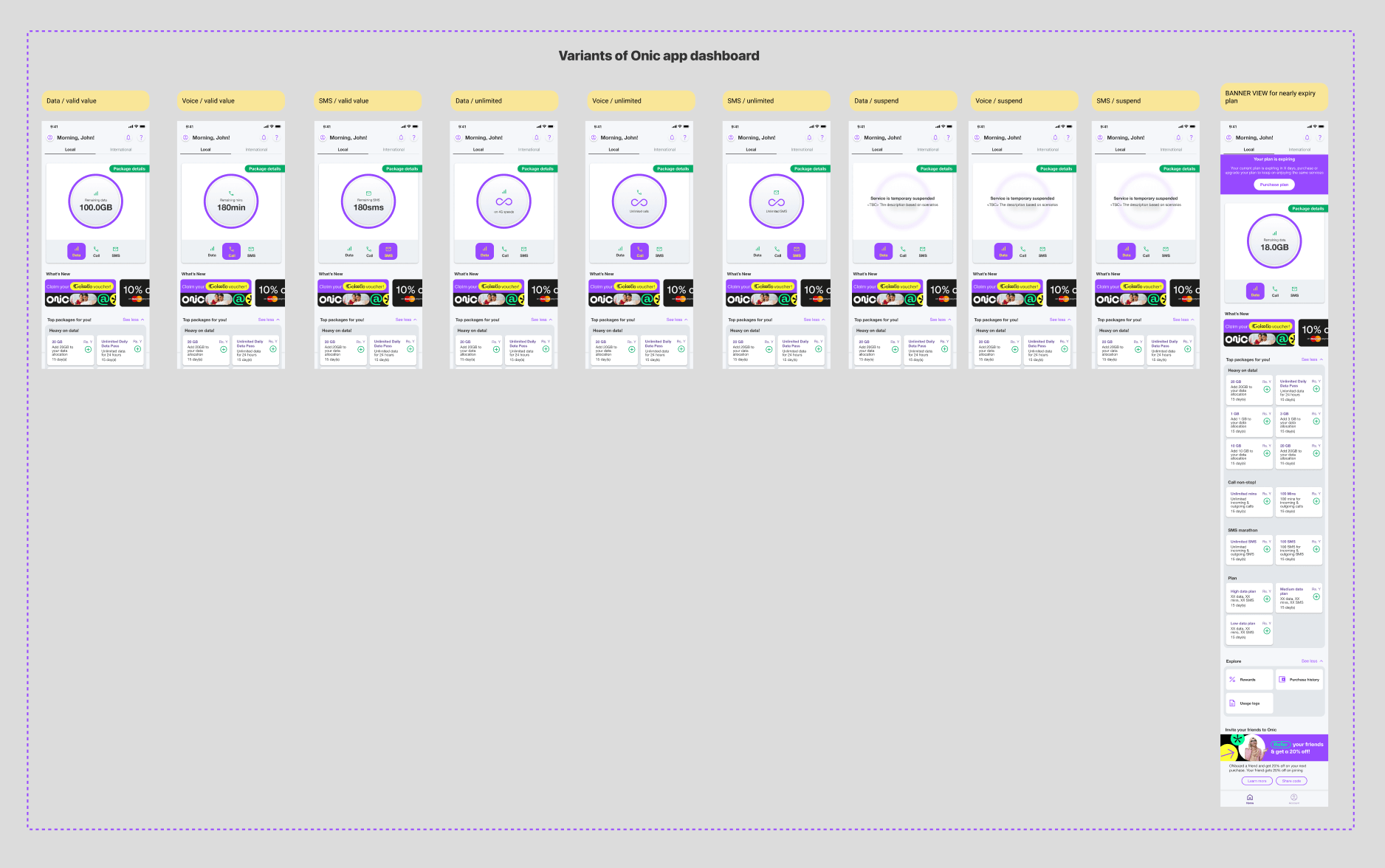
Validation through real-world application
Throughout the development of the reference journeys, we continuously validated our design decisions by applying them directly in active market launches. The Pakistan launch—branded as Onic—served as a critical validation point where we adapted the reference journeys to local regulatory flows and UX while maintaining consistency across the CMS and customer app. This iterative approach allowed us to test assumptions in real operational contexts, identify gaps early, and refine patterns based on actual implementation feedback.
Simultaneously, our design team worked closely with engineering and product management teams to ensure that every design pattern we documented mapped cleanly to technical feasibility and product requirements, ensuring our reference system remained both practical and grounded in real-world constraints across different market contexts.
Outcome
The reference journey accelerated product delivery across teams and launches by streamlining design and engineering alignment across regions, reducing ramp-up time for new teams, and maintaining UX quality while enabling local customisation. It was successfully applied in Pakistan, where we launched the product as Onic, serving as a real-world proof of its effectiveness.
"Circles X is built on a modular foundation, allowing operators to launch, scale, and adapt quickly across markets." — Circles.co
Learnings
This project deepened my practice in systems thinking, documentation, and scalable design. By creating a unified reference model that could adapt across different markets—each with unique regulatory requirements, cultural expectations, and business contexts—I learned how to balance standardisation with flexibility. The experience taught me how to build shared infrastructure that empowers distributed teams to move fast without compromising craft, and how to design systems that can absorb complexity while remaining accessible to both technical and non-technical stakeholders. Working across the CMS and customer-facing layers simultaneously also strengthened my ability to think holistically about product ecosystems, ensuring coherence between operator tools and end-user experiences. This work ultimately became the foundation for how Circles scales design globally—enabling local teams to launch with confidence while maintaining platform integrity.